
 English
  Spanish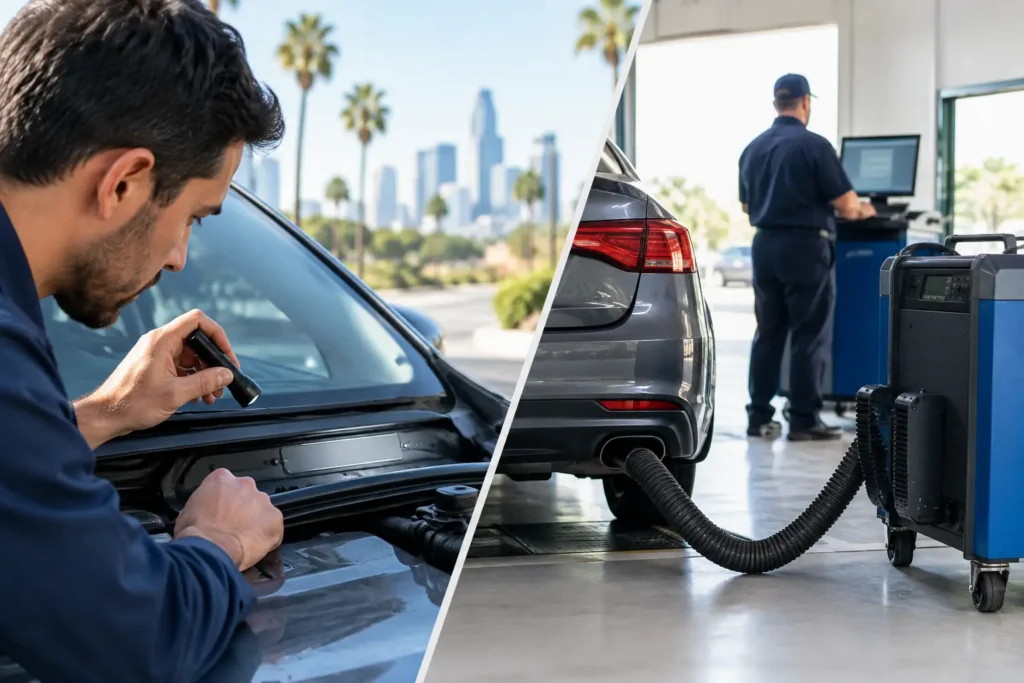
A VIN check and a smog test can both hold up your California registration, but they solve completely different problems. Understanding VIN verification vs smog inspection can save you from making two trips, paying for the wrong service first, or arriving at the DMV without the paperwork needed to finish your transaction.
For Chula Vista drivers, the confusion usually starts after buying a vehicle from another state, transferring a title, or receiving a DMV notice with terms that sound similar. They are not similar. One confirms the vehicle’s identity. The other checks whether the vehicle meets California emissions requirements.
VIN Verification vs Smog Inspection: The Main Difference
A VIN verification is an identity check. A trained verifier physically looks at the vehicle and compares its vehicle identification number to the ownership documents and other required labels or identifiers. The purpose is to make sure the vehicle in front of you matches the vehicle described on the title, registration, or DMV record.
A smog inspection is an emissions check. A licensed smog station tests or electronically reviews the vehicle’s emissions system to determine whether it meets California air-quality standards. It is not designed to confirm ownership, validate a title, or replace a VIN verification.
Think of it this way: VIN verification answers, “Is this the correct vehicle?” Smog inspection answers, “Is this vehicle allowed to operate under California emissions rules?” Depending on your situation, you may need one, both, or neither.
When You May Need VIN Verification
VIN verification is commonly requested when a vehicle is coming into California from another state. If you recently moved from Arizona, Nevada, Texas, or anywhere else and want California plates, expect the DMV to review the vehicle’s identification information as part of the process.
It may also be required when paperwork does not match cleanly. A title with a typo, an older vehicle with hard-to-read information, a missing registration record, or a VIN that raises a DMV question can all lead to a verification requirement. Certain salvage, specially constructed, commercial, and out-of-system vehicles may have additional steps as well.
During a verification, the inspector may review the VIN plate, federal certification label, engine information when applicable, and other identifying details required for that type of vehicle. The exact items checked depend on the vehicle and the transaction. Cars, motorcycles, trucks, trailers, and commercial vehicles do not always follow the same process.
A VIN verification does not certify that the vehicle is mechanically safe, free of hidden damage, or ready to pass smog. It also does not prove that there is no lien on the vehicle. It is a focused DMV identity requirement, which is why accurate documents matter so much.
Bring the Vehicle, Not Just the Paperwork
This is the detail that catches many customers off guard. VIN verification is a physical inspection, so the vehicle generally needs to be present and accessible. If the VIN plate is covered, the hood cannot be opened when required, or the vehicle is stored across town, the appointment may not be completed that day.
Bring the title, registration documents, and any DMV paperwork you received. If you bought the vehicle recently, keep your bill of sale and transfer documents with you too. Clear paperwork helps prevent a small mismatch from becoming a larger delay.
When You May Need a Smog Inspection
A smog inspection is often part of registration renewal or a change in ownership, but the requirement depends on the vehicle’s year, fuel type, use, and transaction. California has exemptions for certain vehicles, including fully electric vehicles and some newer model-year vehicles. Rules for diesel vehicles, hybrids, motorcycles, heavy-duty vehicles, and older vehicles can be different.
For a typical used-car sale, the seller is generally responsible for providing a valid smog certification when one is required. But buyers should not assume the issue has been handled. Before paying for a vehicle or submitting a title transfer, ask whether a smog certificate is required and whether the vehicle has already passed.
For registration renewals, the DMV may send a notice stating that smog certification is needed before renewal can be completed. In many cases, the test result is sent electronically by the smog station. Even then, give the system time to update and keep your receipt until your registration is finished.
A smog test is not a full mechanical inspection. A vehicle can pass smog and still need brakes, tires, suspension work, or other repairs. On the other hand, a vehicle can run smoothly and still fail because of an emissions-related sensor, malfunction indicator light, evaporative system issue, modified equipment, or incomplete monitor status.
If Your Vehicle Fails Smog
Do not rush into random repairs. Start with the failure report and have a qualified repair professional diagnose the specific issue. Clearing a check-engine light right before retesting can create another problem because the vehicle’s onboard monitors may not be ready.
If you are buying a used vehicle that has failed smog, be careful. A low purchase price can become expensive if the repair is complex or if registration cannot be completed on time. Ask for documentation, understand the transfer deadline, and make sure the title situation is clear before committing.
Can You Need Both Services?
Yes. An out-of-state vehicle is the most common example. A driver who moves to Chula Vista with a vehicle previously registered in another state may need VIN verification to establish the vehicle’s identity for California records. If that same vehicle is subject to California emissions rules, it may also need a smog inspection before registration is finalized.
The order can matter. If your vehicle needs both, get clear guidance before spending money or waiting in line. A VIN discrepancy, missing title, or unresolved ownership issue can stop the registration process even after the car passes smog. Likewise, a clean VIN verification will not remove a required smog certification.
This is why a quick review of your documents first can save time. The best next step is based on the transaction, not on what a friend needed for their vehicle last year.
Common Situations and What They Usually Require
If you are renewing California registration, you may only need smog if your renewal notice says it is required. VIN verification is not usually part of an ordinary renewal.
If you are transferring a California title from one local owner to another, smog may be required unless an exemption applies. VIN verification is less common unless there is a record, title, or vehicle identification issue.
If you are registering an out-of-state vehicle, VIN verification is commonly required. Smog may also be required depending on the vehicle and its eligibility for California registration.
If you are dealing with a motorcycle, trailer, commercial truck, salvage vehicle, or vehicle with missing paperwork, do not rely on the rules for a standard passenger car. These transactions often need transaction-specific review.
Avoid Delays Before You Start
The fastest paperwork is paperwork that is complete the first time. Check the name on the title, VIN digits, license plate information, signatures, dates, and lienholder details before you begin. A single wrong digit can create a delay that neither a smog station nor a VIN verifier can fix on the spot.
Also, do not confuse a vehicle history report with VIN verification. A history report may be useful when buying a car, but it does not replace the physical VIN verification required for a DMV transaction. The same goes for a repair shop inspection. Helpful for your peace of mind, but not a substitute for official registration steps.
DMV Services Chula Vista can help local drivers understand which registration documents and vehicle requirements apply before they lose a day to incomplete paperwork. Bilingual, in-person help is especially useful when an out-of-state title, transfer deadline, or VIN issue needs immediate attention.
Before you head out, gather your documents, confirm whether the vehicle must be present, and ask what your specific registration transaction requires. That small preparation step can turn a frustrating DMV task into a finished one.