
 English
 Spanish
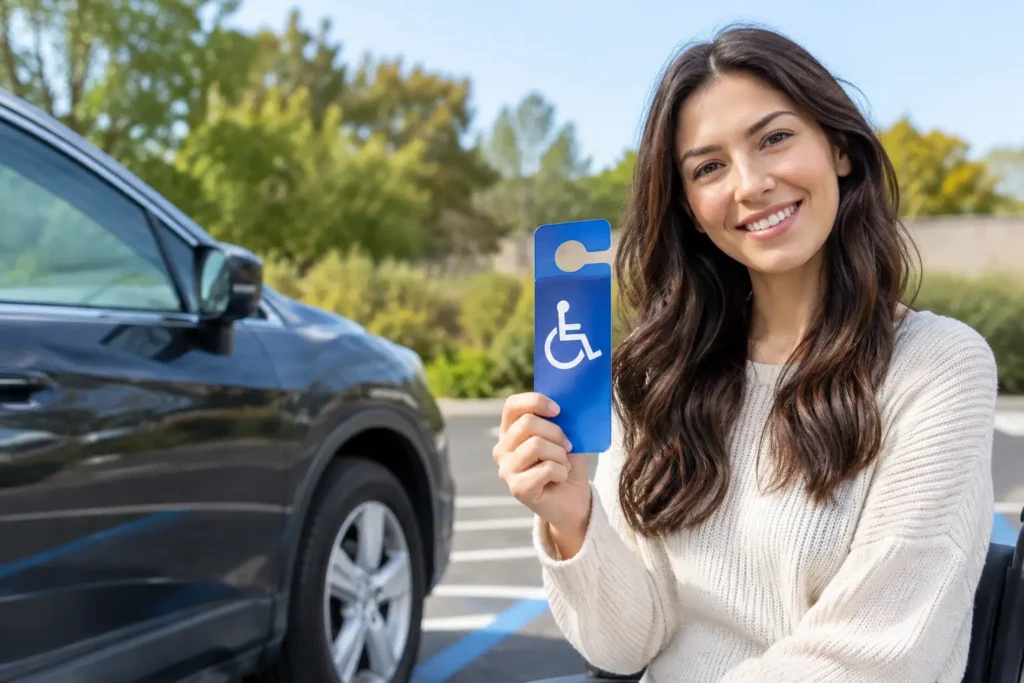
A disability placard can make everyday trips more manageable, whether you are heading to a medical appointment, picking up prescriptions, working, or taking care of family errands. If you are looking for how to obtain disability placard approval in California, the process starts with the right DMV application and a medical certification from an authorized health care professional.
The good news is that you do not need to figure out every DMV detail alone. Knowing which placard fits your situation, what your provider needs to complete, and where you may park can help you avoid delays and get back on the road with less stress.
Who Qualifies for a California Disability Placard?
California issues disabled person placards and license plates to people with qualifying mobility or health conditions. Eligibility is based on the condition itself, not on age or whether someone drives. A passenger who does not drive may still qualify for a placard.
In general, a person may qualify if they have a severe limitation in walking because of a disability, cannot walk without an assistive device, have a documented visual impairment, or have certain heart, lung, circulatory, or neurological conditions. The exact determination must be made by an authorized medical professional.
Qualifying conditions can include the loss or loss of use of one or more limbs, a disability that requires a wheelchair, walker, cane, crutches, or another assistive device, or a condition that substantially limits mobility. A temporary injury may also qualify when a medical provider expects the mobility limitation to last for a limited period.
Do not assume a diagnosis automatically guarantees approval. The medical certification section of the application is what supports your request, and the DMV reviews the completed form.
How to Obtain a Disability Placard: The California Process
For most applicants, the main document is the California Application for Disabled Person Placard or Plates, commonly known as form REG 195. The form has a section for you to complete and a medical certification section for your health care provider.
Start by choosing the type of parking privilege you need. California offers permanent placards for qualifying long-term disabilities, temporary placards for qualifying temporary conditions, travel placards for eligible California residents traveling outside the state, and disabled person license plates for qualifying vehicle owners. The right choice depends on your condition, how long it is expected to last, and whether you own a vehicle.
Next, complete your applicant information carefully. Use your legal name and current address, and make sure the information matches your DMV records when possible. Errors in names, addresses, or signatures can slow down a request that should have been straightforward.
Then take the application to an authorized medical professional for certification. Depending on the situation, this may be a physician, surgeon, physician assistant, nurse practitioner, certified nurse-midwife, optometrist for qualifying vision conditions, or another professional allowed by California DMV rules. They must certify that you have a qualifying condition and indicate whether it is permanent or temporary.
Once the form is complete, submit it to the DMV. A permanent disability placard generally does not have an application fee. Temporary placards typically have a fee and are issued for a limited period, based on the medical certification and DMV rules. Fees and form requirements can change, so it is wise to confirm current details before submitting paperwork.
What to Bring Before You Submit
Bring the completed REG 195 application with the medical certification already signed. You should also have identification available, your current address information, and payment if you are applying for a temporary placard or another service with a fee.
If you are replacing a lost, stolen, mutilated, or never-received placard, the paperwork may be different from a first-time application. Let the person helping you know which situation applies. A replacement request should not be handled exactly like a new medical certification request.
For customers who want in-person assistance reviewing forms and processing eligible DMV transactions, DMV Services Chula Vista can help identify paperwork issues before they become another trip across town. Medical providers decide eligibility, but local administrative support can make the submission process easier to understand.
Permanent, Temporary, and Travel Placards
A permanent placard is intended for a long-term qualifying disability. It is issued to the person, not to a specific vehicle, so it can be used when that person is a driver or passenger. California permanent placards have expiration dates and are generally renewed through the DMV process without requiring a new medical certification every time, unless the DMV requests one.
A temporary placard is for a qualifying disability expected to improve, such as recovery from a major surgery or injury. It is valid for the period certified by the medical provider, up to the maximum allowed by California rules. If the condition continues, a new application and medical certification may be required.
A travel placard can be useful for a California resident with a permanent disability placard or disabled person license plates who is traveling outside California. Parking rules vary by state, city, private parking facility, and country, so check the rules at your destination before relying on a placard during a trip.
Disabled person license plates are different because they are attached to a vehicle registered in the qualifying person’s name. They may be a practical option for someone who owns and regularly uses one vehicle. A placard can be more flexible for someone who rides in several family vehicles, uses rideshare services, or is often transported by others.
Where You Can and Cannot Park
A valid California disability placard or disabled person license plate can allow parking in designated accessible spaces and may provide certain parking privileges in metered areas. But it does not give permission to park anywhere.
You cannot use it in spaces marked for a specific vehicle, loading zones where parking is prohibited, tow-away areas, red zones, fire lanes, or private spaces without permission. Local rules can also affect time limits and meter requirements. Always read posted signs, especially at hospitals, shopping centers, beaches, airports, and downtown areas.
The placard must be displayed only when the person it was issued to is driving or being transported. Letting a friend or family member use your placard when you are not present is misuse and can result in citations, fines, and loss of parking privileges. Keep it in a safe place and hang it from the rearview mirror only after parking, not while driving.
Common Delays and How to Avoid Them
The most common problems are incomplete medical certification, missing signatures, selecting the wrong placard type, and submitting an outdated form. Another issue is asking a provider to certify a condition without bringing the correct paperwork to the appointment.
Before you submit, review the application line by line. Confirm your name, address, signature, placard selection, and provider section are complete. If your condition is temporary, make sure the expected duration is clearly certified. If you have changed addresses, resolve that DMV record issue so future mail reaches you.
If you are assisting a parent, spouse, or another family member, remember that the placard belongs to the qualified individual. Their information and medical certification must be used, even if someone else is handling the paperwork or providing transportation.
Get the Paperwork Right Before Your DMV Visit
A disability placard is more than a parking convenience. For many people, it means being able to attend appointments, shop independently, and move through daily life with less physical strain. Take the time to get the medical certification and DMV application right the first time, then keep the placard available only for the person it was issued to.
If you are in Chula Vista or nearby San Diego County communities and want practical help with DMV paperwork, bring in your completed documents for a clear review before submission. A few minutes of local, hands-on guidance can save you from an incomplete application and another long DMV wait.