
 Spanish
 English
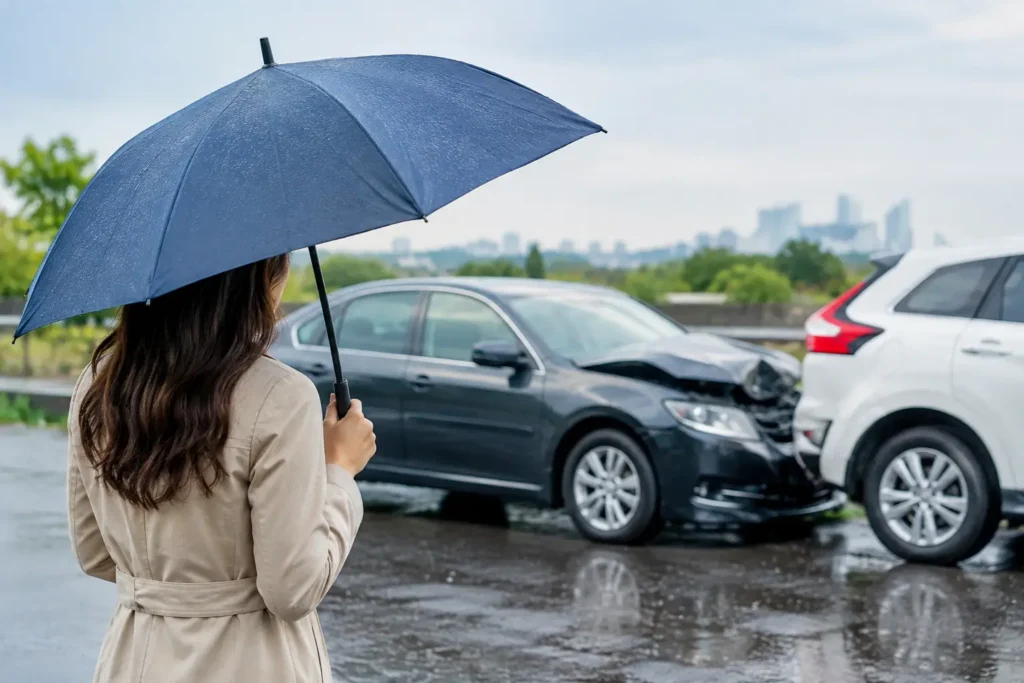
A serious crash can exceed a standard auto policy faster than many drivers expect. One moment of distraction, a multi-car collision on I-5, or an injury claim that requires ongoing care can create costs well beyond basic liability limits. So, does umbrella cover car accidents? Usually, yes – but only after your qualifying auto liability insurance has paid its limit, and only for covered liability claims.
For Chula Vista and San Diego County drivers, umbrella insurance is not a replacement for auto insurance. It is extra liability protection that can help protect your savings, future income, and other assets when a covered accident leads to a large claim or lawsuit.
Does Umbrella Cover Car Accidents?
An umbrella policy can provide an additional layer of liability coverage after your auto insurance limits are exhausted. If you cause a covered car accident and the injury or property damage claim is higher than your auto policy limit, the umbrella policy may pay the remaining covered amount, up to the umbrella policy limit.
For example, imagine you cause a crash that seriously injures another driver. Your auto policy has a $250,000 bodily injury liability limit, but the final settlement and legal costs total $900,000. If your auto policy pays its full $250,000 limit and you have a qualifying $1 million umbrella policy, the umbrella coverage may help with the remaining covered liability amount.
That is the main purpose of umbrella insurance: protection when a major claim goes beyond the coverage you already carry. Many umbrella policies start at $1 million in additional coverage, with higher limits available for households with greater exposure or assets.
It protects liability, not your own vehicle
This distinction matters. Umbrella coverage is generally designed for your legal responsibility to other people. It may help when you injure someone, damage another person’s vehicle or property, or face a covered lawsuit after an accident.
It normally does not pay to repair your own car after a collision. For that, you need collision coverage on your auto policy. It also does not replace comprehensive coverage for theft, vandalism, fire, weather damage, or a broken windshield.
If you are injured in a crash caused by an uninsured driver, medical payments coverage, personal injury protection where available, health insurance, or uninsured/underinsured motorist coverage may be the more relevant protections. The right answer depends on who caused the accident and what coverage is on the policy.
How an Umbrella Policy Works After a Crash
Think of your auto liability policy as the first layer. Your umbrella policy is the second layer that may step in after the first layer is used up.
California requires drivers to carry liability coverage, and the minimum limits increased in 2025. However, legal minimums are intended to establish basic financial responsibility, not necessarily to protect a driver from a serious injury claim. Medical treatment, lost income, pain and suffering claims, vehicle damage, and attorney fees can add up quickly after a major crash.
An umbrella insurer usually requires you to maintain certain underlying limits on your auto policy. A common requirement is higher than California’s minimum limits, such as $250,000 per person, $500,000 per accident for bodily injury, and $100,000 for property damage. Requirements vary by carrier, so the auto policy and umbrella policy must be reviewed together.
If your auto coverage is too low for the umbrella policy’s requirements, you may have to raise your auto liability limits first. This is not a problem to discover after an accident. It is much easier to fix when you are reviewing coverage before a claim happens.
What Car Accident Claims May Be Covered?
A covered umbrella claim often begins with an accident where you are legally liable for another person’s injury or property damage. Coverage can extend beyond a simple fender bender and may be especially valuable in a high-cost claim involving severe injuries or multiple people.
Situations that may trigger umbrella protection include a crash that injures several passengers, an accident involving a pedestrian or cyclist, damage to multiple vehicles, or a lawsuit alleging negligence. Depending on the policy, an umbrella may also help with legal defense costs for covered claims. Defense costs can matter because a lawsuit can be expensive even when the final outcome is uncertain.
The word «covered» is doing a lot of work here. Insurance is based on policy language, exclusions, driver eligibility, vehicle use, and the facts of the accident. An umbrella policy is powerful protection, but it is not a blank check for every incident involving a car.
What an Umbrella Policy Usually Will Not Cover
Umbrella policies have exclusions, and drivers should understand them before relying on the policy. Exact exclusions differ by insurance company, but umbrella coverage generally will not pay for intentional harm, criminal acts, or damage you cause on purpose.
It also may not cover accidents involving a vehicle that is excluded from the policy, a driver who is not properly listed or permitted, or business use that requires commercial auto coverage. This is especially important for delivery drivers, contractors, rideshare drivers, and business owners who use personal vehicles for work.
A personal umbrella may not fully protect a vehicle used for commercial operations. If you own a truck, operate a business vehicle, transport goods, or have employees driving for work, ask about commercial auto liability and commercial umbrella coverage. Personal and commercial risks should not be mixed without confirming the policy is designed for the use.
Umbrella insurance also does not cover normal vehicle wear, mechanical breakdowns, traffic tickets, or every cost related to your own injuries and car repairs. Those issues belong under other insurance coverages or are out-of-pocket expenses.
Who Should Consider Umbrella Coverage?
Umbrella coverage is worth considering for more people than just high-income households. If a serious accident leads to a judgment above your auto limits, assets such as savings, a home, future wages, or investment accounts may be exposed. A large claim can follow a driver for years.
It can be particularly useful for homeowners, parents with teen drivers, people with significant savings, landlords, professionals, frequent drivers, and households with multiple cars. Drivers who regularly travel through busy parts of Chula Vista, National City, San Diego, or across the border may also want to consider the risk of high-traffic driving and unfamiliar road conditions.
A household with a teen driver may have a stronger reason to review umbrella coverage. New drivers are learning judgment, not just driving skills, and one serious mistake can have expensive consequences. The same is true for anyone who regularly drives passengers, carpools, or commutes long distances.
Still, umbrella insurance is not automatically necessary for every person. If you have limited assets and a tight budget, increasing your basic auto liability limits may be the first practical move. In many cases, a good coverage review compares the cost of higher auto limits against the cost of adding an umbrella policy.
Choosing the Right Limit for Your Household
There is no one umbrella amount that fits every driver. A $1 million policy may be a reasonable starting point for one household, while another may need $2 million, $3 million, or more because of real estate, savings, business interests, or higher-risk driving situations.
Start by looking at what you could lose in a lawsuit. Consider your home equity, savings, retirement accounts, income, vehicles, rental property, and future earning potential. Then review every driver and vehicle in the household, including teens, motorcycles, boats, recreational vehicles, and any property you rent out.
Be honest about how vehicles are used. A policy built around personal commuting may not respond the same way if a vehicle is being used for deliveries, rideshare work, or a side business. Clear information upfront helps avoid coverage gaps later.
An independent insurance review can also help compare carrier requirements and pricing. At DMV Services Chula Vista, drivers can get hands-on help reviewing auto and umbrella options without having to sort through confusing insurance terms alone.
Before You Buy, Confirm These Details
Before choosing an umbrella policy, make sure the underlying auto liability limits meet the insurer’s requirements. Confirm which household members and vehicles are included, whether teen drivers are listed, and whether your work or side-business driving needs commercial coverage.
Ask how legal defense costs are handled, whether uninsured or underinsured motorist coverage is available as part of the umbrella arrangement, and what exclusions apply to rideshare, delivery, rental vehicles, motorcycles, watercraft, and rental property. These details can change the value of a policy substantially.
The best time to review umbrella coverage is before a serious accident forces the question. A quick policy review now can help you drive with clearer limits, fewer surprises, and protection that matches the life you have built.